
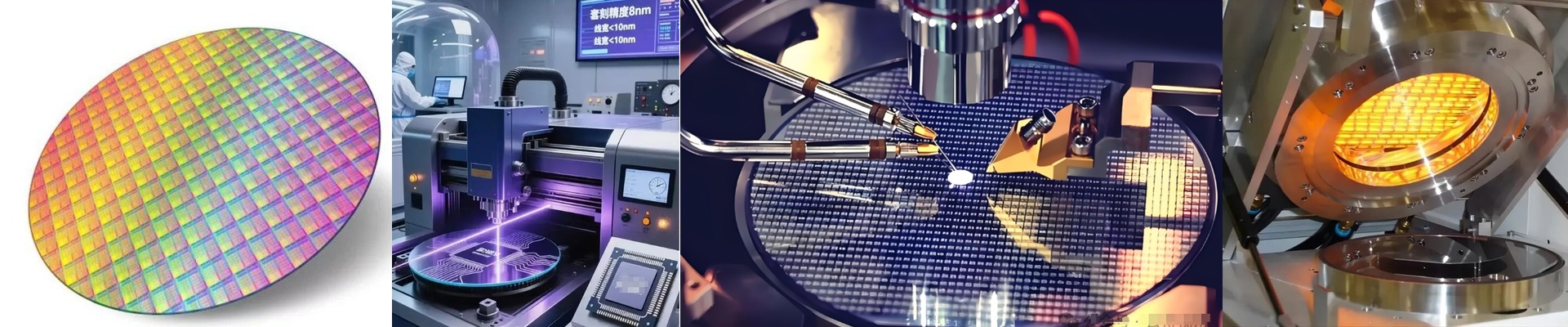
On the lithography floor, the soft bake and hard bake are where the photoresist profile is set. A 2°C swing can shift Ttop by 20 nm, and that drift shows up as linewidth variation across the lot. You need temperature control you can measure, repeat, and trace. What matters under the hood We built the precision IR sensor around a stable NIR emitter and a calibrated detector, so wafer-level thermal uniformity holds at ±0.1°C during the bake. The sensor head fits through tight oven windows, and the optics are sealed against outgassing, which keeps readings consistent in Class 1–100 cleanrooms. Zero particle generation isn’t a tagline; it comes from ditching rotating parts and keeping a fixed alignment path. Output repeatability stays within 0.1% around the clock, so long campaigns run without recalibration. Why it plays in the bake ovens You run photoresist bakes with tight thermal budgets. This sensor holds setpoint across the wafer, so critical dimension control tightens and the rework queue thins out. You widen the process window without sacrificing throughput, and scrap drops because excursions get flagged right away. Equipment stability improves too—fewer false alarms, fewer unplanned interventions. The payoff is higher line yield and cycle time you can plan around. What you need to get right Installation comes down to matching the oven aperture and dialing in the emissivity for the photoresist stack; miss that, and the reading will be biased. We ship a calibration kit tuned to common films, but new stacks may need a one-time qualification. Schedule a short line stop to hook the sensor into the oven controller and align the beam path. Once it’s set, the system runs with minimal maintenance.