

Construction Site Heater: Power That Actually Shows Up and Works
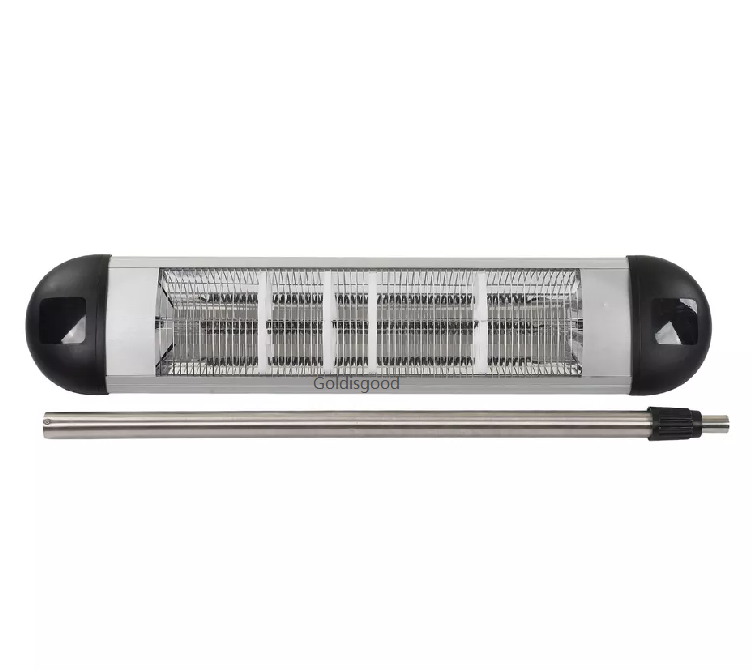
On a job site, you don’t have time to wait around for heat. You need it to kick on the second you flip the switch—and then throw off enough output to matter, without tripping breakers or making you rewire half the trailer. So we built this heater around a 400V supply and 2500W of power. It pulls serious current, sure, but it stays on the same industrial circuits you’re already running—so you’re not fighting your own setup. And that 300mm tube? It puts the heat right where you need it. Tight corners. Drying spots. Temporary enclosures. You get focused warmth, not a giant, wasteful cloud of ambient air.
The Build: Halogen, Coating, and a Connection That Stays Put
Here’s the thing about job-site heat: it’s got to be tough, and it’s got to be immediate. That’s why we went with a halogen-filled, quartz-tube infrared design. It throws radiant heat the second it turns on—and it doesn’t complain when you cycle it on and off all day. The tube has a reflective coating to push more energy forward, so more heat lands on the work surface instead of vanishing into the air around it. And the R7s connector? It’s there because a job site shakes, bumps, and gets handled constantly. It locks in solid, holds up to high heat, and survives the vibration without getting loose. It’s a straight drop-in fit for common fixtures, so you can wire it and get moving—fast.
Where It Shines—And the Real-World Trade-Off
This heater is made for construction work: drying concrete, warming materials before they go down, and keeping work areas from freezing when the weather turns mean. It hits hard, and that intensity comes with a trade-off: ambient heat builds quickly. So you do need to think about placement and airflow. But when you run it within its voltage and wattage limits, it just delivers steady, focused infrared heat—especially in places where a standard convection heater struggles to keep up.