
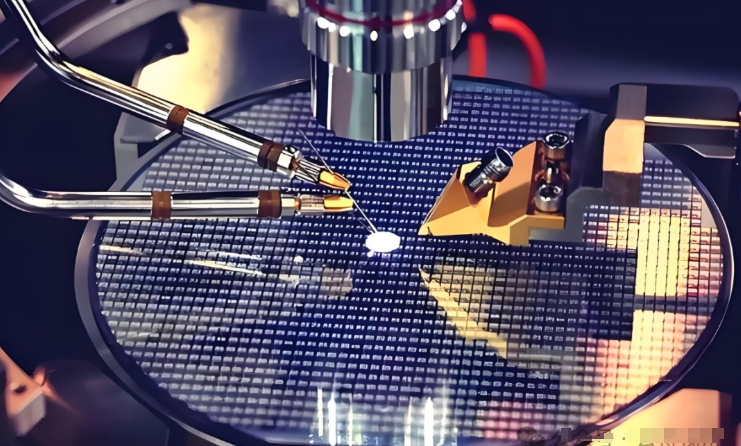
On the line, the wafer is waiting on heat to lock in the dopant profile. One cold spot, one temperature drift, and activation falls short. The junction shifts. Yield slips before the wafer even hits etch or lithography. In a high-volume fab, that one thermal excursion can wipe out an entire shift. We built our dopant activation infrared heaters to cut that risk out. The goal is straightforward: repeatable, wafer-level temperature control with tight uniformity—and cleanroom behavior you can count on.
What matters, technically
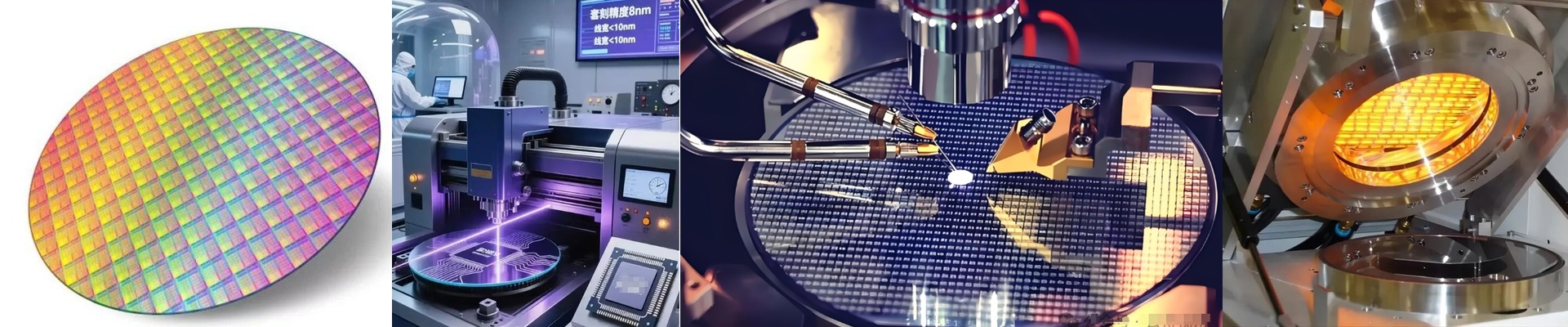
Dopant activation is a thermal budget problem, not just a temperature number. You need fast, controlled heating to get implanted species active without driving unwanted diffusion. Our IR heaters use short-wave lamps and quartz windows to put the energy right where it needs to be, with response fast enough to keep the thermal profile inside the window. We hold wafer-level uniformity at ±0.1°C across the active area. That’s what gives you consistent sheet resistance and predictable junction depth after activation. Cycle-to-cycle repeatability stays within ±0.2°C, so the same recipe lands the same electrical result, lot after lot. The system is built for cleanroom operation from Class 1 to Class 100. Parts are chosen so the heater doesn’t shed particles during steady-state heating, which matters when the next steps are photoresist-sensitive. The architecture is meant to run 24/7—thermal cycling is designed around high-throughput tools and long lamp life. And the thermal control fits the fab’s process window. For photoresist bakes—soft bake and hard bake—temperature stability directly drives critical dimension control and sidewall profile. The same IR platform gives you a stable platen temperature for consistent photoresist flow and solvent removal, without the swings you get from older hot-plate designs.
Why this works in production
Dopant activation lives at the intersection of speed, precision, and cleanliness. Underperform on heat, and implant dopants don’t fully activate—devices fail electrically. Overshoot, and diffusion runs long—junction depth drifts outside the design rule. Either way, you’re staring at rework, scrap, or an expensive detour into higher-temperature belt furnaces. Our IR heaters shorten the thermal path and tighten the window. Rapid, uniform heating cuts the time the wafer spends at peak temperature, preserving the thermal budget. That translates to faster cycles without sacrificing yield, and it lets you place activation closer to lithography and etch without drift. Cleanroom behavior is just as important. In lithography, a small particle spike can kill a wafer during exposure. We design the heaters to avoid shedding, and the thermal system is isolated so heat stays on the wafer—without stirring up local turbulence. The payoff is stable particle counts and fewer line stops. Reliability shows up on the OEE board. These heaters are built to run continuously, with thermal stability that doesn’t drift over long campaigns. When a lamp hits end-of-life, the swap is straightforward, and calibration holds. The process stays in control, and the line keeps moving.
What to keep in mind
IR heaters deliver speed and uniformity, but integration details matter. Match lamp spectrum and power density to the wafer’s emissivity and the tool’s chamber geometry. For best results, install with proper thermal isolation and shielding, and tune the control loop to the actual load—not just the empty platen. Plan for cleanroom constraints. Route exhaust and cooling so airflow doesn’t disturb the local particle environment. Spec the tool interface—power, communication, and mechanical mounting—up front so it matches the platform. There’s also a footprint trade-off. The IR design is compact, but the optical path and window materials take space that can be tight in legacy tools. We work with the footprint to minimize changes, but a small envelope shift is sometimes unavoidable. If your fab runs tight thermal budgets across dopant activation, photoresist soft bake, and hard bake, the question isn’t whether you need precise heating. It’s whether your current thermal system is earning its keep on the line. Our dopant activation IR heaters deliver the control, repeatability, and cleanroom performance needed to keep the process honest, from wafer start through final etch.