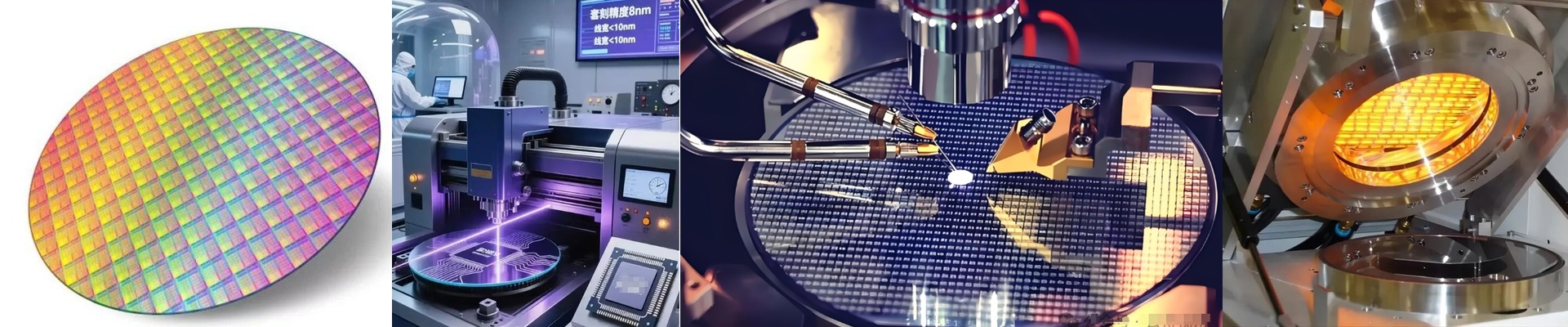
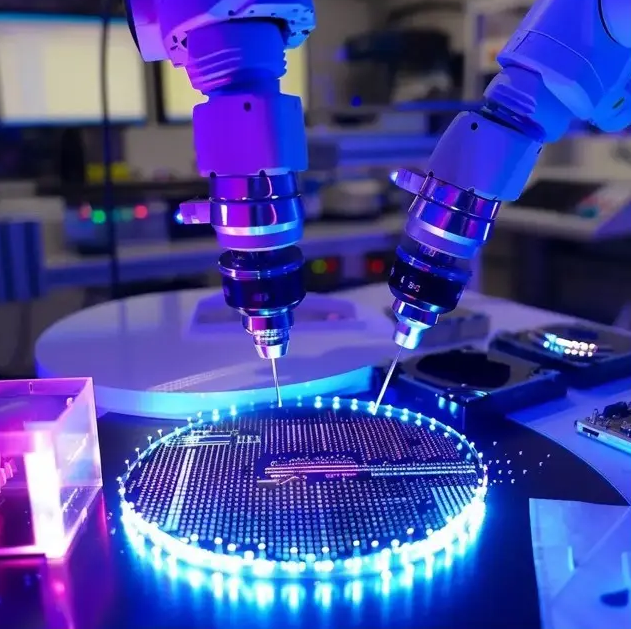
On the fab floor, the thermal budget for every exposure lot is set in stone. If lamp output drifts or bake temperature wanders, critical dimension control falls off spec — and the line stops. ASML lithography lamp spares are built to hold that thermal envelope steady through soft bake and hard bake, so photoresist profiles stay repeatable, lot after lot. What matters under the hood These spares hold stable spectral output with tight intensity control, keeping wafer-level temperature uniformity within ±0.1°C during the photoresist bake. The envelope and base materials are chosen for cleanroom compatibility across Class 1–100, with zero particle generation under standard operating conditions. Output consistency holds over thousands of hours, which keeps the tools running 24/7 and cuts unplanned downtime. The payoff: repeatable bake profiles, predictable etch interfaces, and less scrap from temperature-induced defects. Why this matters in lithography Soft bake is where solvents come out and film stress is set. Hard bake locks in adhesion and etch resistance. With these lamps, the bake curve follows the recipe exactly, which tightens process centering and lowers energy use per wafer. You get faster cycle times without chasing temperature excursions, and fewer lamp swaps mean better tool utilization. The result is stable CD control, fewer reworks, and consistent yield across product splits. The practical details Compatibility is tool-specific and calibration-dependent. Before installation, verify the lamp code, connector interface, and power supply profile against your ASML tool revision. Tie the lamp change to a routine PM window so calibration integrity stays intact. Treat the lamp as part of the thermal system, not just a standalone part.